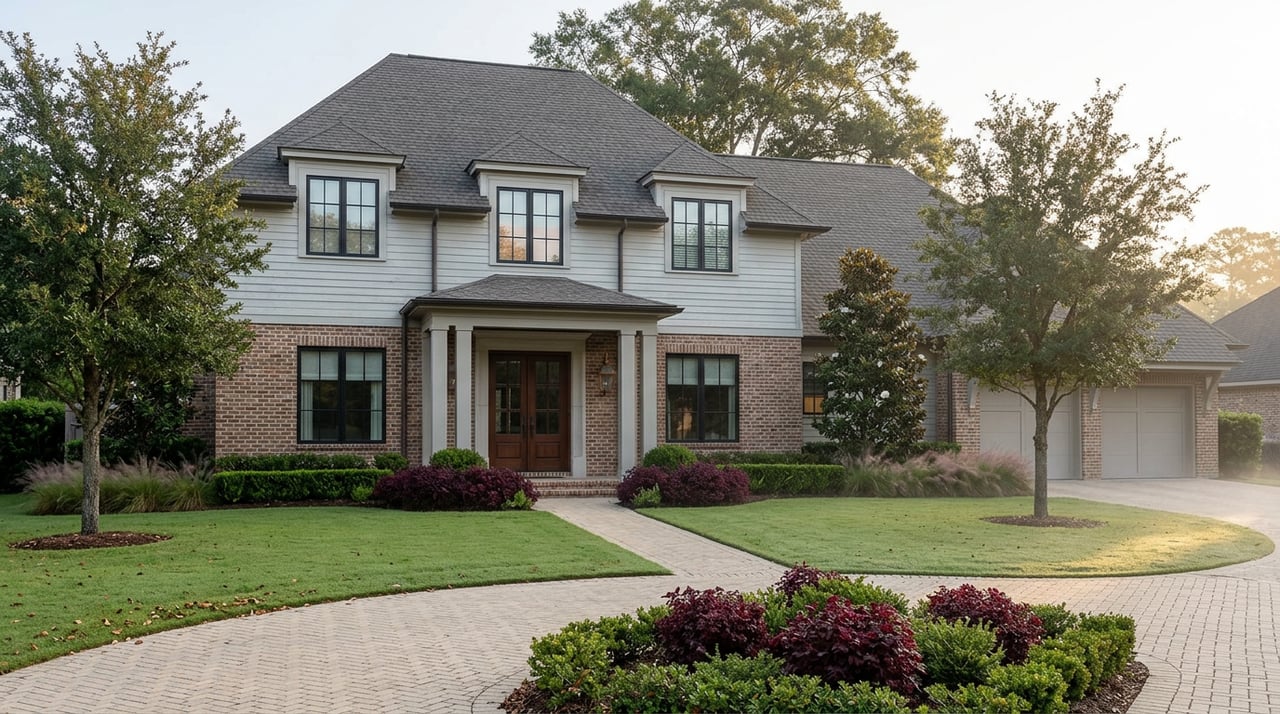
Picture two buyers touring homes on the same Saturday, both looking at $650,000 listings in The Woodlands. One house sits in Grogan's Mill, developed starting in 1974 and one of the community's original sections. The other sits in Creekside Park, the newest village and still growing today. Same price. Same square footage, roughly. Their lenders will run two very different numbers on the total monthly payment, and neither buyer will know why until someone hands them the tax bill breakdown.
The reason comes down to a fact most relocating buyers never think to ask about: The Woodlands doesn't have a mayor.
A Township, Not a City
Since 2010, The Woodlands has held a status unlike almost anywhere else in Texas: it operates as a special-purpose Township rather than an incorporated city. Residents have had two real chances to change that, most recently in November 2021, when a ballot measure asked voters whether to incorporate as the City of The Woodlands. It failed decisively. County-level results put the "against" side at roughly 68 percent, with only about 32 percent voting in favor of becoming a city.
That vote matters for anyone buying here today because it locked in a governance structure that doesn't work like the cities around it. Conroe has a city council and a single municipal tax rate. Houston has a mayor and a police department it runs directly. The Woodlands has a Township Board of seven elected directors, no mayor, and a patchwork of overlapping taxing entities instead of one city hall sending one bill.
What You're Actually Paying For
When a buyer asks "what's the tax rate here," there usually isn't a single answer. The property's recurring costs can include some combination of the following, and what applies depends on the exact address:
| Layer | Who sets it | What it funds |
|---|---|---|
| Montgomery County | County government | County services, roads, courts |
| School district | Mostly Conroe ISD | Public schools |
| The Woodlands Township | Elected 7-member board | Parks, fire, public safety support, community programs |
| A Municipal Utility District (MUD) | Elected MUD board | Water, sewer, drainage infrastructure and bonds |
| HOA dues (separate from taxes) | Village and/or neighborhood association | Pools, common areas, deed restriction enforcement |
The Township's own piece of that stack is small and, this year, it went down. On September 3, 2026, the Township Board adopted a 2026 property tax rate of $0.1694 per $100 of taxable value, a decrease from the $0.1714 rate charged in 2025. That's a modest, predictable number set by a public board in a public meeting.
The MUD line is the one that isn't predictable, because it isn't one thing. Montgomery County alone is home to dozens of numbered municipal utility districts serving different pockets of The Woodlands and the surrounding area, each with its own board, its own bond debt, and its own rate. Older sections of the community were built before some of this infrastructure needed a MUD to finance it. Newer sections, built with fresh water, sewer, and drainage systems, typically do carry one. That's the mechanism behind the two-buyer scenario above: the Grogan's Mill listing and the Creekside Park listing can carry different total tax bills for reasons that have nothing to do with the size of the house.
Layer HOA dues on top and the picture gets more specific still. Every village in The Woodlands runs its own village association, and many neighborhoods within a village have a second, smaller association layered underneath that. A buyer comparing two listings needs both sets of dues, not just one, to know the real carrying cost.
This Isn't Old News
It would be easy to treat all of this as historical trivia, a quirky footnote about a 2021 vote that settled the question years ago. It didn't settle the question. The governance structure is an active, moving story right now, and the last three weeks proved it.
On August 26, 2026, The Woodlands Township Board voted unanimously to approve a Third Amendment to its Regional Participation Agreement with the City of Houston, a deal that dates back to 2007. The City of Houston passed its version on September 2, 2026. Under the new terms, the Township will pay Houston roughly $50 million by 2030, a combination of $27.4 million in direct payments over the next three years and $22.6 million in existing fund balance released for Houston's use. In exchange, Houston permanently gives up any future ability to annex The Woodlands, while the Township remains inside Houston's extraterritorial jurisdiction. The deal also ends an older arrangement that required The Woodlands to keep sending Houston a slice of its sales tax revenue, one-sixteenth of one percent, a stream that will stop flowing to Houston starting in 2030.
Township Chairman Brad Bailey framed the deal as protecting the community's independence for good. Houston Mayor John Whitmire called it a win-win for both cities. Whatever the framing, the practical takeaway for a buyer is this: the same board that sets your Township tax rate is actively negotiating million-dollar agreements about what kind of government The Woodlands will have, and that negotiation is happening in 2026, not 2010.
There's a second reminder on the calendar. The Woodlands Township Board of Directors has an election scheduled for November 3, 2026, for seats on the same seven-member board that just approved the Houston agreement and set this year's tax rate. Governance here isn't a settled fact you inherit when you buy a home. It's a live process with a vote every couple of years, and the outcomes of those votes eventually show up in your tax bill or your Township assessment.
What This Means Before You Write an Offer
None of this should scare a buyer away from The Woodlands. Plenty of people move here specifically because the Township model has kept services strong without a traditional city tax rate stacked on top of everything else. But it does mean the homework looks different than it would in an incorporated city, where one visit to the city's finance page tells you the whole story.
Before writing an offer on a specific address, it's worth asking for:
- The property's MUD status and, if one applies, its current rate and recent rate history
- A resale certificate or estoppel letter from any HOA or sub-association tied to the property, showing current dues and any pending special assessments
- The Township's current assessment as it applies to that address
- Whether the school district is Conroe ISD, since a small number of Woodlands zip codes fall into other districts
A title company will confirm most of this during the transaction, but knowing to ask early means it never becomes a surprise at closing. Two homes at the same list price in The Woodlands can carry genuinely different monthly costs, and the difference isn't visible on the listing photos. Those costs are reflected in the tax bill and any HOA dues; the address determines which village, MUD, and HOA layers apply.
A Few Questions Buyers Ask Us Directly
Does The Woodlands have a mayor? No. It operates as a Township governed by a seven-member elected Board of Directors rather than a mayor and city council. Residents voted against incorporating as a city in November 2021.
Why do two similarly priced homes in The Woodlands have different total costs? The difference usually comes down to which Municipal Utility District, if any, serves that address, plus which village and neighborhood HOA layers apply. Older sections sometimes carry no MUD at all, while newer construction typically does.
Is incorporation likely to come back up for a vote? The 2021 result was decisive, and nothing in the current Township-Houston agreement changes the community's ability to consider incorporation again in the future. That decision would still rest with voters, and there's no indication another vote is imminent.
If you're comparing homes across The Woodlands' villages and want the real carrying-cost picture before you fall for a floor plan, that's exactly the kind of groundwork Stephanie Cooper walks clients through before an offer goes in. Let's Connect and get the numbers straight for the address you're actually considering.
This article is general information, not legal, tax or financial advice. Consult a qualified professional about your situation.